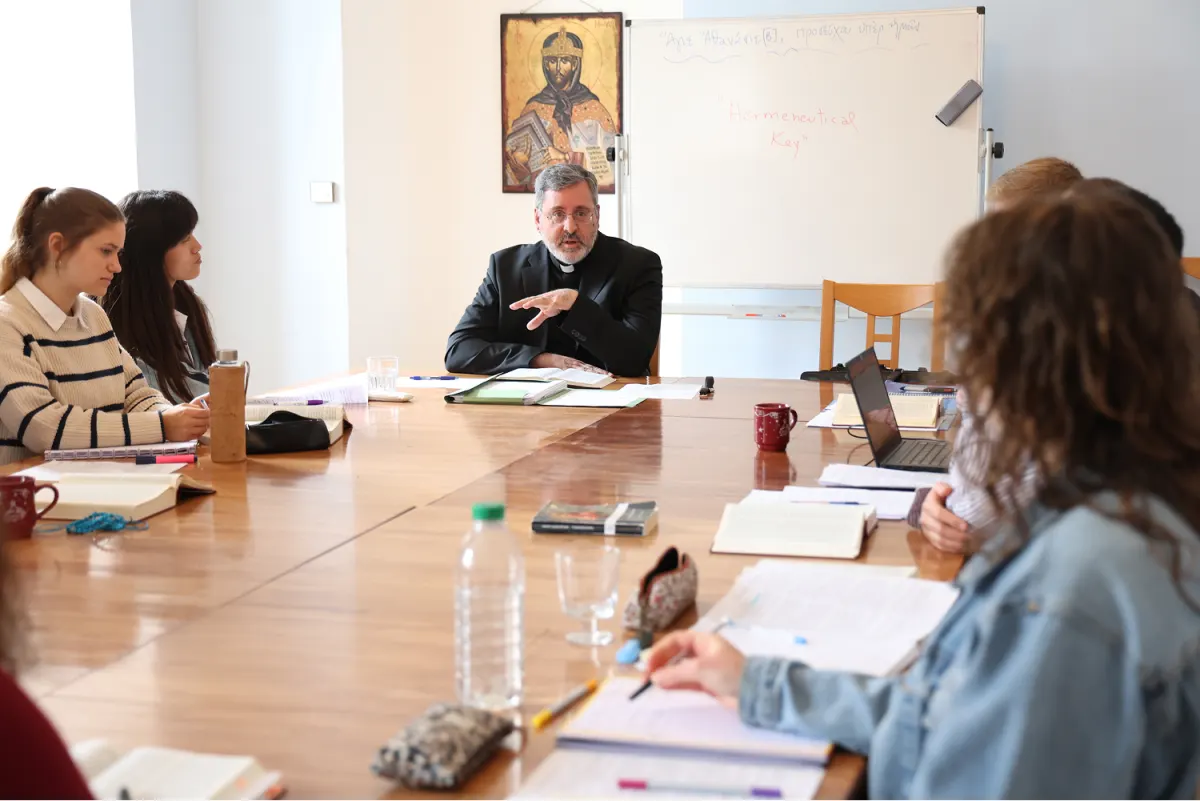
The seminar table, not the lecture hall.
A dozen students, one great text, a professor who knows you by name. At ITI you do not sit through lectures about theology. You read the masters themselves and argue your way to understanding.
The Numbers Behind the Method
Small by design.
The Seminar Method
You are not an audience.
The seminar method is the heart of the ITI’s distinctive approach to formation. It is not a mere teaching technique but expresses a different idea of what a university is.
Around One Table
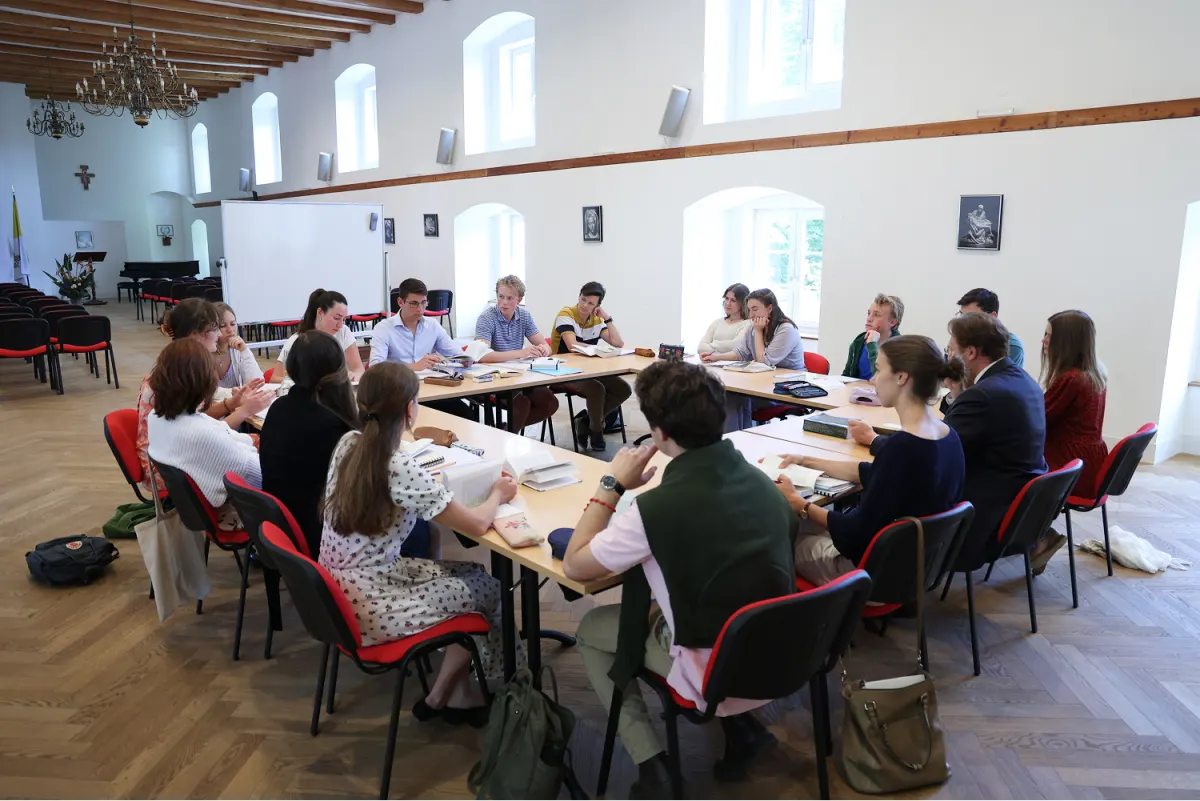
A dozen students. No back rows.
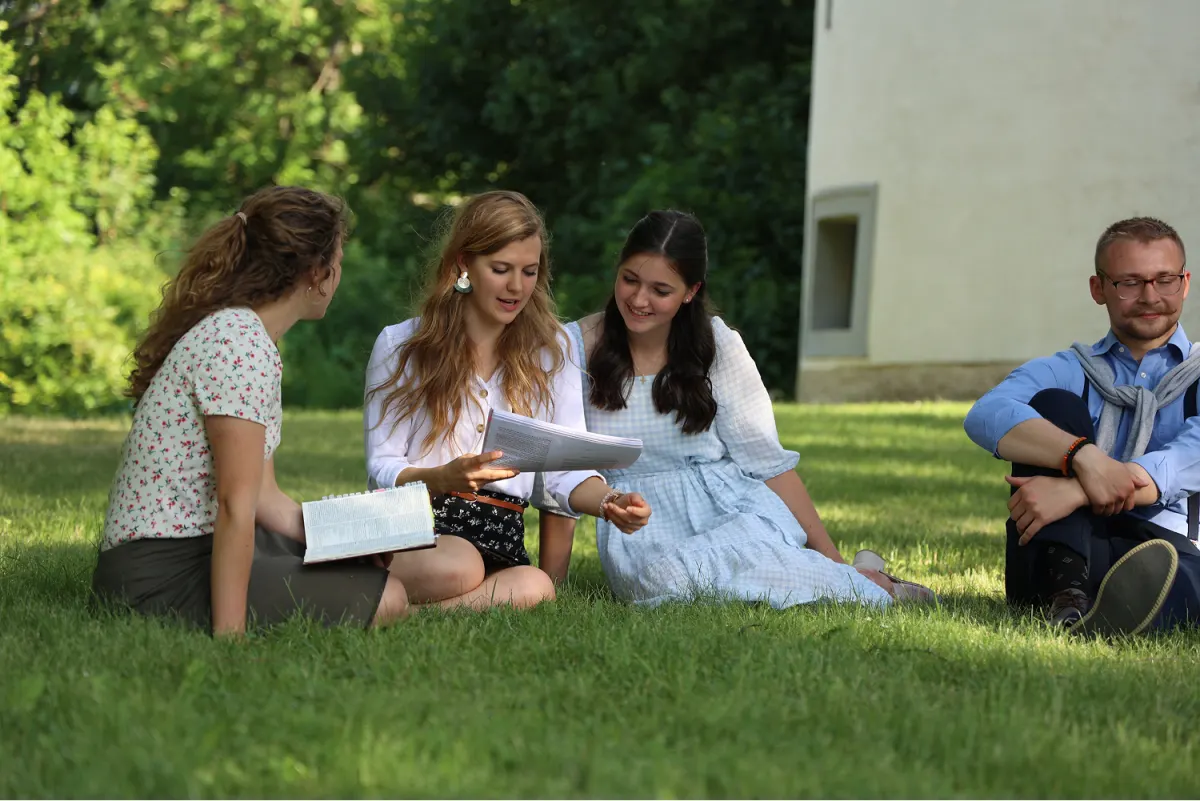
Every class at ITI is a seminar of about a dozen students around one table. There is no lecture hall to disappear in: you prepare the text, you are asked what you think, and your question can change the direction of the hour.
With a 1:4 student-faculty ratio, professors know each student by name: how you read, where you struggle, what you are capable of. Education here is personal because it must not be anything else.
Disputation
Real questions, argued to conclusions.
Seminar discussion is not an exercise in opinion-sharing. You bring genuine questions, examine what is said by others, and learn to argue from principles to conclusions: it is the ancient discipline of disputation, practiced daily.
In discussing and disputing, the goal is not to win an argument, but to arrive together at the truth of the matter. The great texts are opened, and by the end of the hour twelve people understand more than any of them could ever have done alone.
“The ITI is not first a place. It is a community of people engaged in a certain activity, and its aim is the formation of a certain kind of person.” On the pedagogy of the ITI
Texts are teachers.
The decisive pedagogical exercise at ITI is the students’ reading: by this, we all aspire to place ourselves at the feet of the great masters of the classical and Christian tradition, and to learn from them. As enquiring readers we ask of every text: why is the author writing, what is he saying, and how is he saying it?
The faculty strive to be living models of this discipleship. They open the difficult pages until, by and by, students become proficient readers of the masters themselves.
Bring your own questions.
One does not seek answers to questions not asked. The seminar lives from the questions you carry into it: raising them, examining what others say, arguing from principles to conclusions.
The common good of truth.
A common good is one that many can share without thereby dividing or diminishing it. Our seminars are ordered to such a good as this, seeking out the liberating good that is truth for the mind.
This is a good that unites: it lifts each person out of the narrow circle of private life into the joy of the community that is the Body of Christ.
“… in the unity of science and holiness ‘we find the true spirit of that doctrine which is destined to save the world’. For the teaching of that doctrine, in ancient times, ‘did not end with the brief daily lesson; it was continued in the constant intercourse of the disciple with his master’” (Bl. Antonio Rosmini in Veritatis Gaudium 4d).
Ad Fontes: To the Sources
You read the masters themselves, not summaries of them.
The wisdom of the ancients, the Sacred Scriptures, the Fathers of the Church, St. Thomas Aquinas, the Doctors and Saints: page by page, in and outside of the classroom, with time to think. Texts are carefully chosen from the greatest teachers and saints of the tradition, from the philosophers of antiquity, the Christian Fathers of the East, the medieval scholastics of the West, to the present age. Here at the ITI the intellectual life is truly universal, breathing with both lungs of the Church, East and West.
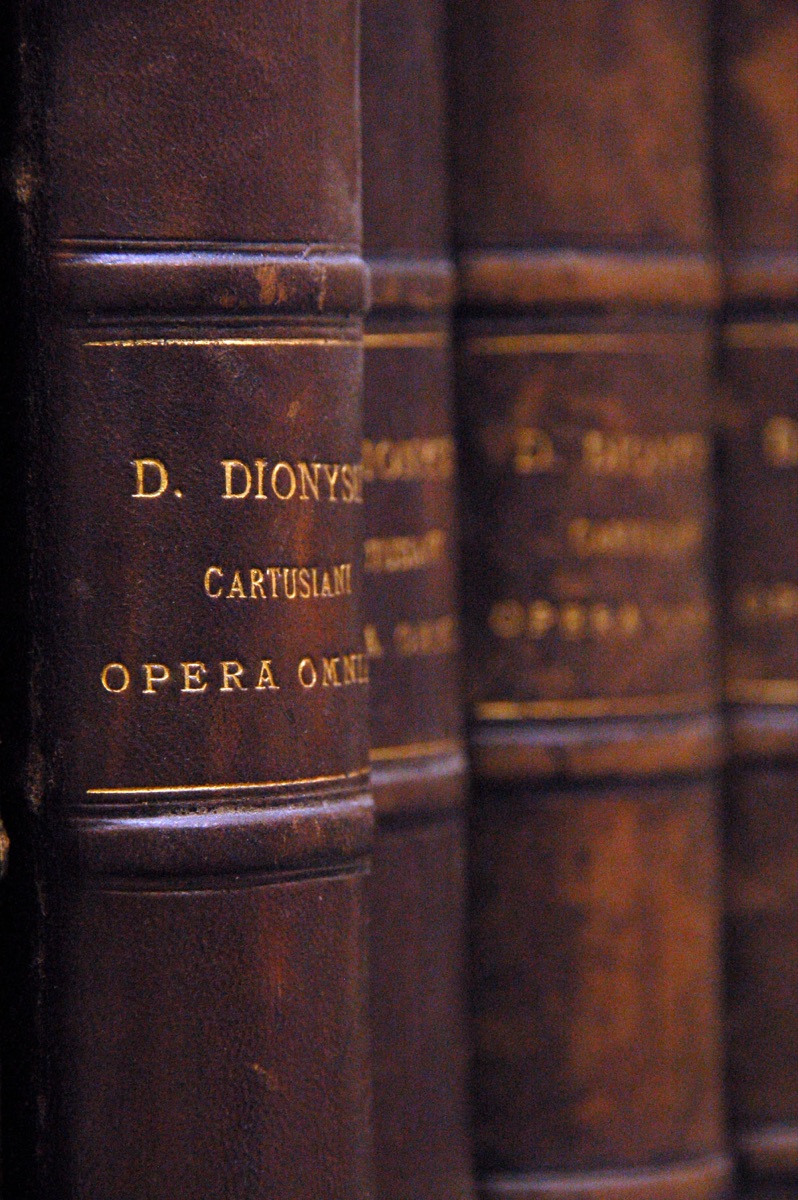
Reading for class at ITI is treated as real intellectual work: deliberate, slow, repeated; cogitare et ruminare, to ponder and to turn over in one’s mind, as the monastic tradition puts it. Latin and Greek open the texts in their own words; philosophy trains the mind that reads them.
How is the curriculum ordered?
Seven principles shape every course.
Seven founding principles order the whole of study, from the first semester to the last.
-
1The Word of God as Center
Scripture as the Church receives it stands at the center of the curriculum. All other courses are ordered to unfolding its meaning.
-
2Ad Fontes, East and West
The curriculum has its point of departure in the primary sources written by the great masters of the theological tradition, from the Fathers of the Church to the present age.
-
3Pedagogy
Teachers and students actively collaborate in pursuing the understanding of the Church’s faith through the reading and guided discussion of the masters.
-
4Theology in its Unity
The curriculum seeks to unfold theology out of its inner unity, in conformity with its essence as a scientific reflection of the faith of the Church.
-
5Theological Rationale
The rationale of studies at ITI is theological throughout. Both the sequence of semesters and the composition of courses in each semester are shaped in accord with this unity.
-
6Primacy of the Theological Question
Historical-critical investigations are a necessary aspect of the study of sources. Such investigations, however, find their inner completion only in the properly theological question.
-
7Above All, Charity
Theology stands under the rule of the new commandment and exists for the sake of union with the One whose love for us we come more deeply to understand.
The Library
30,000 volumes, a few steps from the seminar room.
Theology and philosophy stand at the heart of the collection, alongside the social sciences, fine arts, Christian literature, and history. The sources read in seminar wait on the open shelves: the Church Fathers in the Patrologia Latina and Graeca, the great commentaries on Holy Scripture, and the medieval and modern masters from Aquinas to Ratzinger.
One Connected Whole
Wisdom, not just information.
The study of Latin and Greek, logic, geometry, philosophy, history, literature, and all the theological disciplines of our curriculum, constitutes an integrated whole whereby we may strive for the goal of advancing in wisdom and understanding of the highest truths of all. Every discipline in our curriculum builds on what has preceded it and anticipates what is to come. The great classical and Christian tradition stands before each student, allowing each to be formed by it and from within it.
“Anyone who wishes to understand the mind of the sacred writers must first cleanse his own life and approach the saints by copying their deeds”St Athanasius
What is studied in the morning is prayed at noon. Study is joined to worship, the intellectual life to the sacramental life; shared meals, friendship, and the daily discipline of community: a formation of the whole person, for whom theology and sanctity, study and charity, may increase together.
Academic Quality, Sealed
Pontifical, and recognized by Austria.
This way of studying carries a seal: ITI is a pontifical institution, its degrees and its ecclesiastical faculty accredited by the Holy See through the Dicastery for Culture and Education, one of around seventy such institutions worldwide. Its degrees are additionally recognized by the State of Austria.
Visit ITI in Trumau
Take your seat in the seminar.
No page can carry what a seminar carries. Come to Trumau, sit in on a class, and see whether this is the way you want to study.