A Catholic university in Schloss Trumau, founded by Pope St. John Paul II, where theology is studied from the sources and lived in prayer and community.
Mission
Four pillars, one university.
ITI was founded by Pope St. John Paul II for the study of Catholic theology as a unified whole. Its strength comes from four elements working together at the same time.
The study of Catholic theology
ITI is dedicated to theology as a comprehensive discipline, with particular attention to marriage and the family, preparing Catholic leaders, lay and clergy, to engage contemporary culture and serve the work of evangelization.
A truly international community
Students come from Central and Eastern Europe, Western Europe, the Americas, and beyond. In the vision of John Paul II, the university is a lived experience of the Church that “breathes with both lungs” of East and West.
Study from the original sources
Sacred Scripture, the Fathers, and the Doctors of the Church are read directly. Careful reading, discussion, and comprehension of primary texts form both theological judgment and personal virtue.
A living Catholic community
Students, families, and faculty live and pray together. This daily witness shows the beauty and feasibility of Christian family life and fosters vocations to marriage, religious life, and the priesthood.
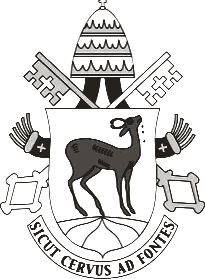
Crest & Motto
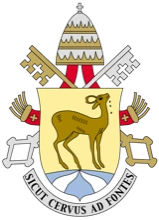
Sicut Cervus ad Fontes.
“As a deer longs for sources of water, so my soul longs for you, O God. My soul thirsts for God, for the living God.”
Psalm 42:2–3
Thirst
The deer stands for the deepest longing of the human heart. As St. Augustine says, our hearts are restless until they rest in God. Study at ITI begins in this thirst: the desire to love God with all one’s heart, soul, and strength.
The Sources
The waters are Christ, the living water, and the Church’s tradition that flows from him: Scripture, the Fathers, the doctors, and the saints. The deer drinking from the sources shows the student engaging these texts directly: reading, questioning, and discussing rather than only attending lectures.
The Holy See
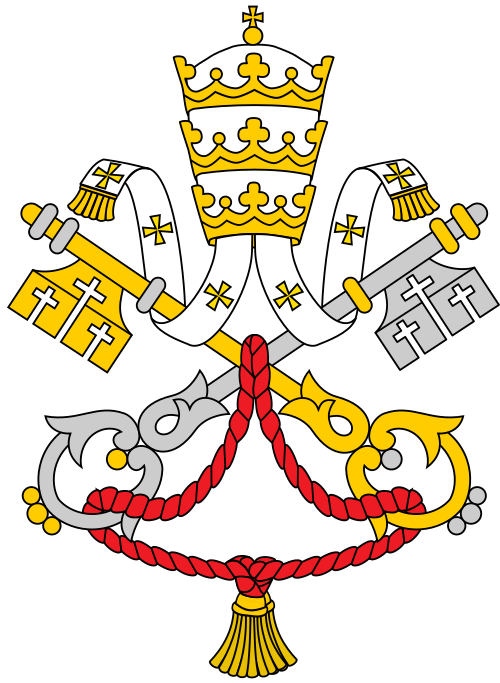
The papal insignia frames the crest, because ITI’s degrees are granted by the Holy See. The university stands within the living tradition of the Catholic Church, faithful in doctrine and open to the full breadth of East and West.
Numbers & Accreditation
A real university, in numbers and in law.
115 students from 22 nations, taught in seminars of a dozen. All degrees, the ecclesiastical faculty, and ITI as an institution are accredited by the Holy See and recognized by the Republic of Austria.
115
Students
22
Countries
1:4
Faculty : students
26
Teaching faculty
30 000
Library volumes
1996
Founded
Founder & type
Founded 1996 by Pope St. John Paul II. An ecclesiastical, co-educational, English-speaking Catholic university.
Degrees
BA Liberal Arts · STB · Master in Marriage & Family · STL · STD.
Chancellor
His Excellency Mag. Josef Grünwidl, Grand Chancellor and Archbishop of Vienna.
Classroom & campus
Seminars of 3–15 students at Schloss Trumau, 20 km south of Vienna.
Pontifical Accreditation
The Holy See
Degrees, faculty, and institution are accredited by the Dicastery for Culture and Education, one of around 70 pontifical institutions of higher education worldwide.
From a Carthusian charterhouse in Gaming to a castle south of Vienna, the story of ITI is one of a small community that set out to study theology as a unified whole, and to live it.
In the 1990s, Pope St. John Paul II asked the Austrian bishops to establish a Catholic theological institute with three concerns at its heart: the crisis of marriage and the family throughout the world, the theological formation of students from the former Soviet-bloc countries, and a deeper understanding between East and West, including the Eastern and Western traditions of the Church. The bishops agreed, the Holy See appointed Archbishop Dr. Christoph Schönborn, O.P. as Grand Chancellor, and the International Theological Institute for Studies on Marriage and Family was born.
Archbishop Schönborn asked an old acquaintance from Salzburg, DDr. Michael Waldstein, then a recently tenured professor at Notre Dame, to leave his position and become Founding President. Waldstein agreed and brought a Notre Dame colleague with him: Walter J. Thompson, the institute’s first Vice-President. Together with Schönborn they built the curriculum that still shapes the university today.
The first students arrived in 1995 at the Kartause in Gaming, a former Carthusian monastery founded in 1330 by Albrecht II, Duke of Austria, where ITI shared a campus with the Franciscan University of Steubenville. In January 1997, on the Feast of St. Thomas Aquinas, Pope St. John Paul II sent a message in honor of the institute’s birth and official opening. That same year ITI saw its first graduating class: three students.
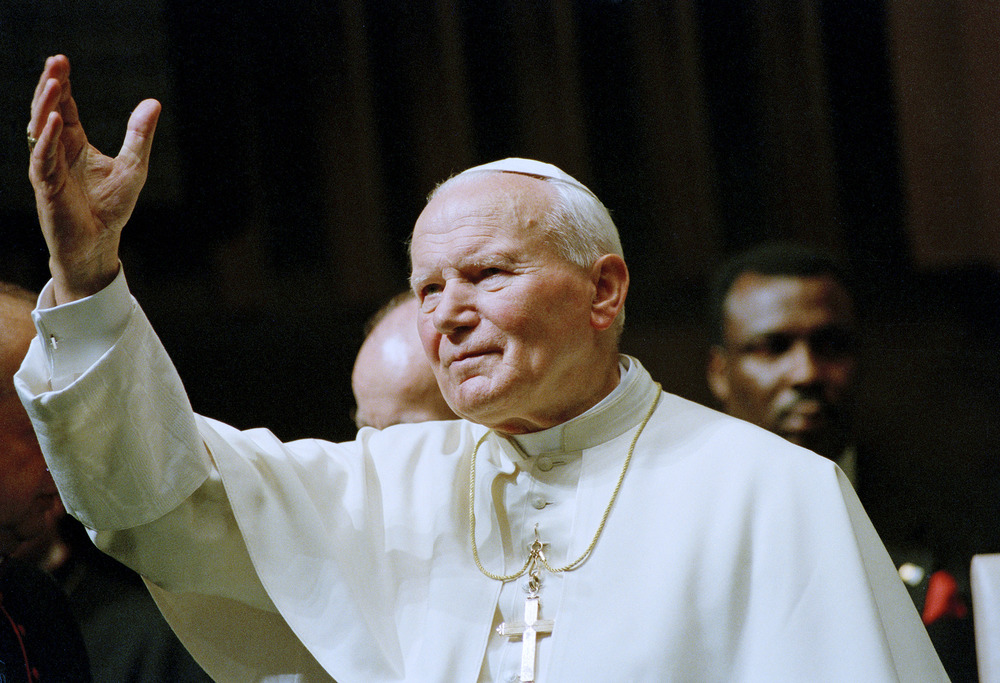
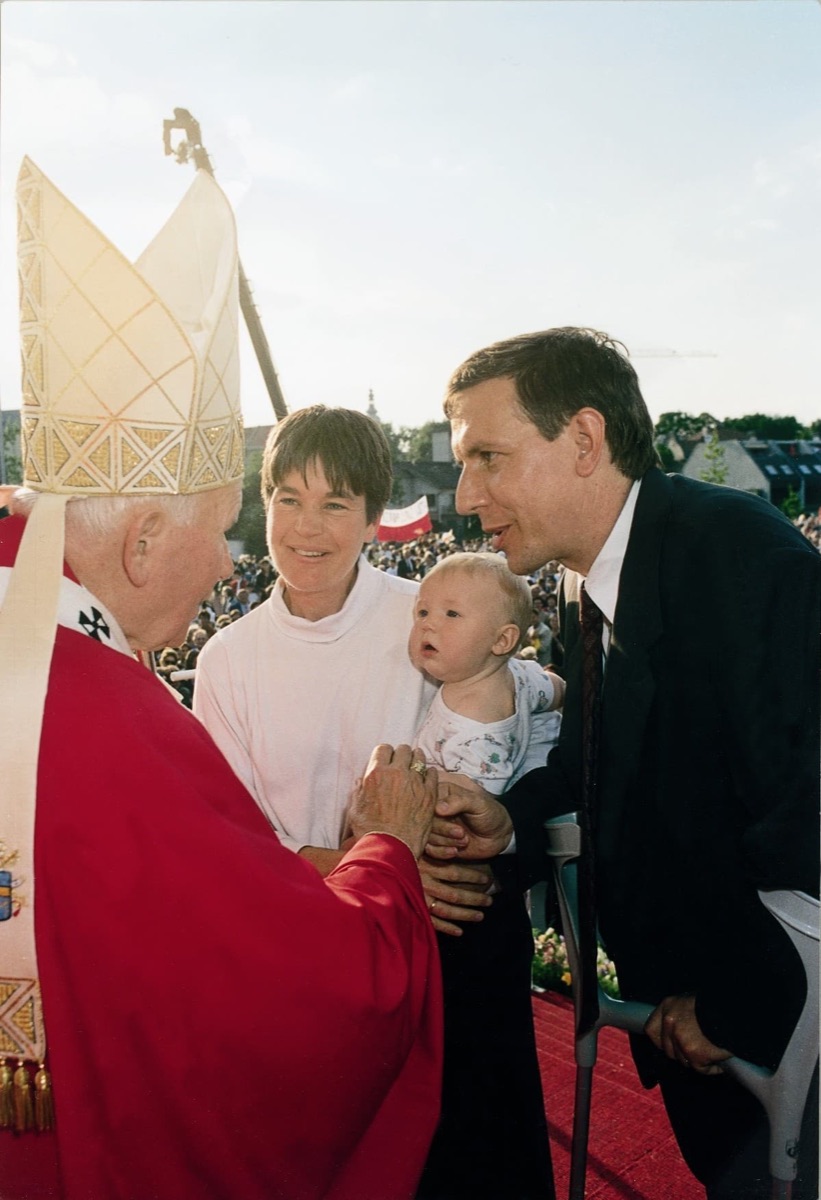
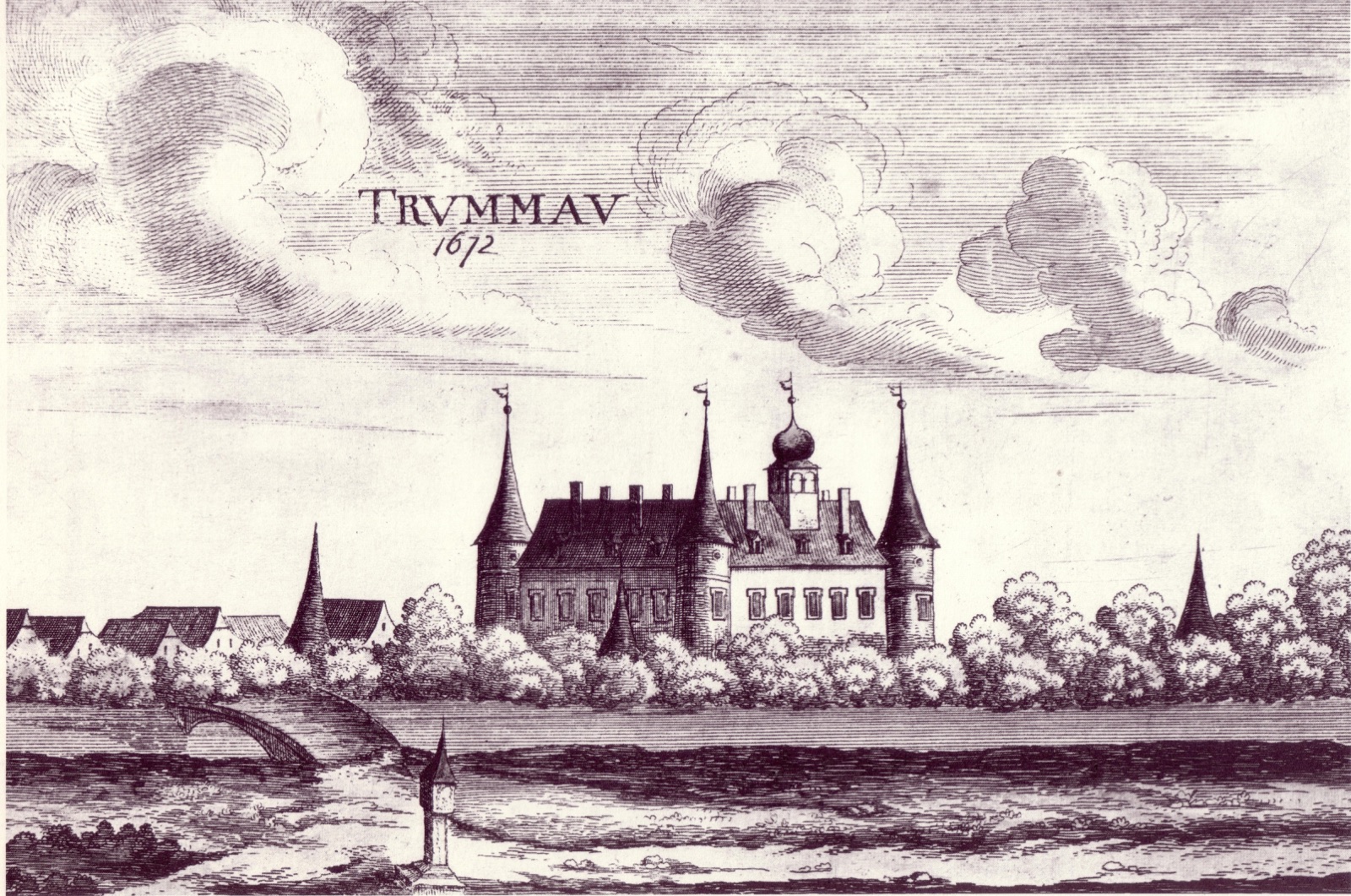
Pope St. John Paul II, founder of the ITI.The founding Waldstein family with Pope St. John Paul II.Schloss Trumau in a 1672 engraving; the castle dates to 1138.
The institute kept growing, mostly by word of mouth from students who came not only to study theology but to live it. Over the years students have come from more than thirty countries: from Albania, Belarus, and Ukraine to Brazil, Cameroon, China, India, New Zealand, and the USA.
Needing room to grow, ITI moved in 2009 to Trumau near Vienna, a village once deeded to Heiligenkreuz Abbey by Duke Leopold IV. Classrooms, library, and administration are housed in the Trumau Schloss, built in 1138.
In September 2018 ITI added the three-year Bachelor in Liberal Arts, and in 2021 the institute was renamed Katholische Hochschule ITI. Today graduating classes number around 30 students across the STB, STL, STD, MMF, BA, and Studium Generale programs, and the fruit of their studies shows in the work alumni are doing in the Church and in the world.
1990sPope St. John Paul II asks the Austrian bishops to found the institute.
1995First cohort arrives at the Kartause in Gaming (founded 1330); the International Theological Institute is established.
1997Papal message and official opening on the Feast of St. Thomas Aquinas; first graduating class of three students.
2009Relocation to Schloss Trumau (built 1138), 20 km south of Vienna.
2018Launch of the three-year Bachelor in Liberal Arts.
2021Renamed Katholische Hochschule ITI.
Presidents
Michael Waldstein (1996–2006), Msgr. Larry Hogan (2006–2014), Christiaan Alting von Geusau (2014–2023), Bernhard Dolna (since 2023).
Patron Saints
Three patrons, one way of life.
The patron saints of ITI make its mission visible: theological wisdom, humble love, and the holiness of marriage and family life.
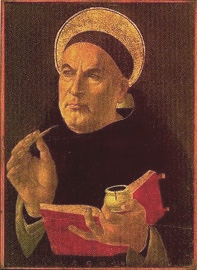
St. Thomas Aquinas
Doctor of the Church
The great Doctor of the Church read Scripture, the Fathers, and the philosophers as one single search for truth. Following the express wish of Pope St. John Paul II, he is the guide and model of theological study at ITI. His method of careful reading, honest questions, and ordered reasoning shapes the whole curriculum.
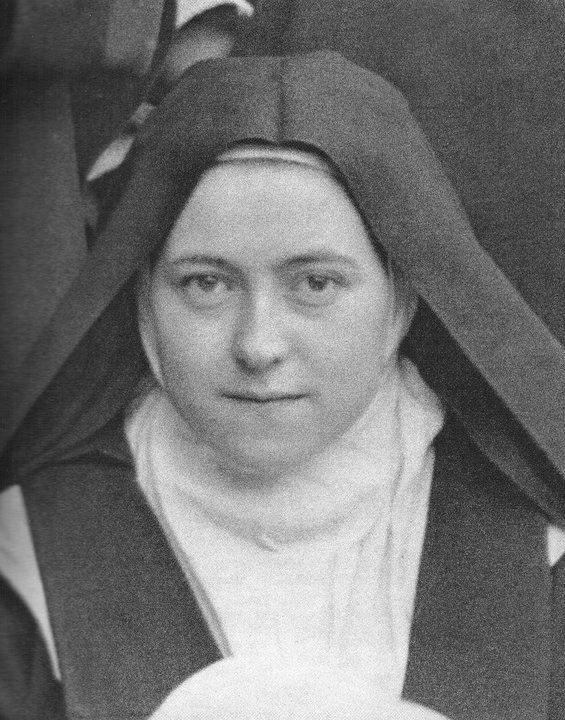
St. Thérèse of Lisieux
Doctor of the Church
A cloistered Carmelite who died at twenty-four, Thérèse is a Doctor of the Church for her “Little Way”: great love in small, hidden things. ITI takes her as patroness of its own hidden work, a small community that studies, prays, and serves quietly. She keeps the university’s ambitions humble and its love concrete.
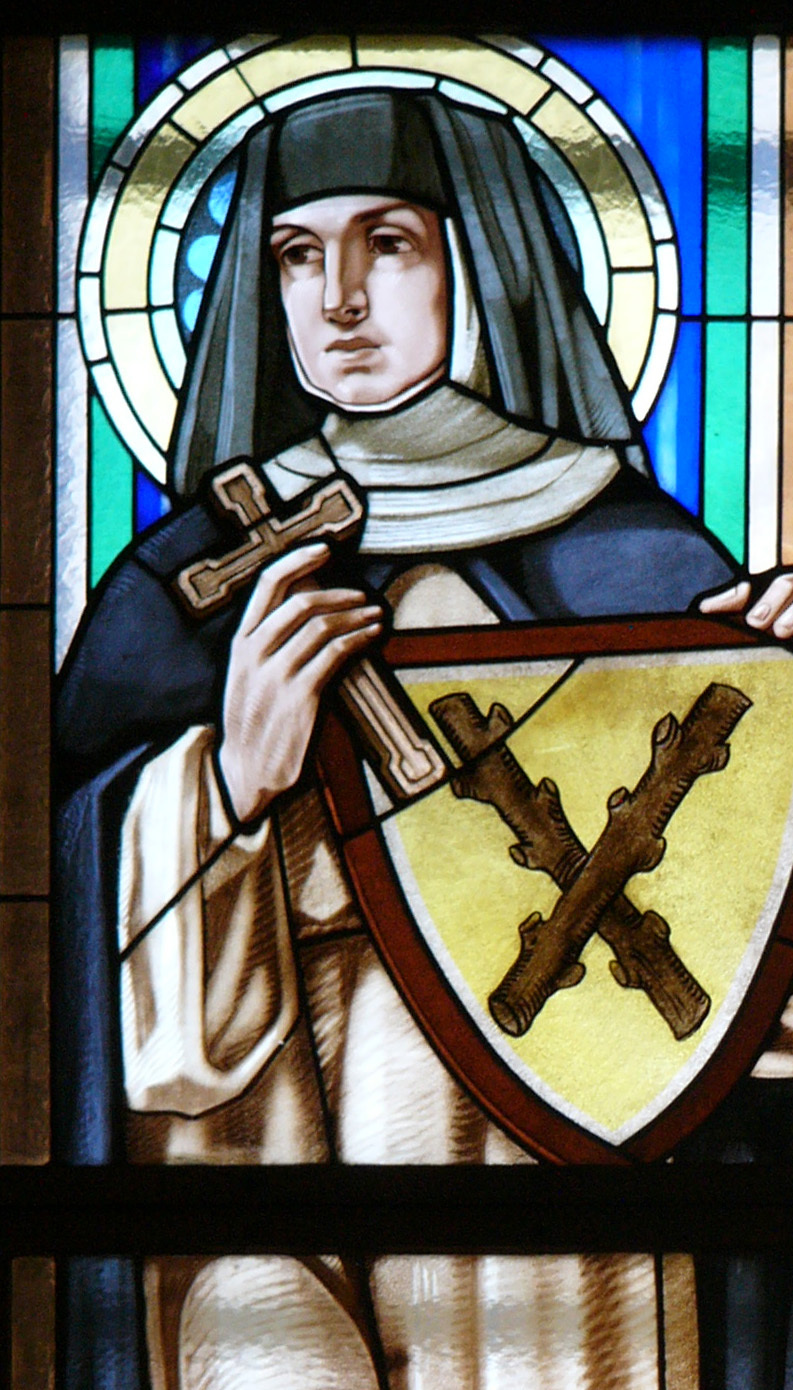
St. Zdislava of Lemberk
Wife and Mother
A wife and mother of four in thirteenth-century Bohemia, Zdislava united family life, prayer, and generous care for the poor and the sick. Pope Paul VI praised her as a model of marital fidelity and domestic spirituality. She is patroness because families are full members of the ITI community, and because the Master’s program here is devoted to marriage and the family.